The drive across the river
The morning begins in darkness. A car crosses the Nile before sunrise, the city still quiet, the water black and smooth under the bridge.
The West Bank feels like a different country at this hour. The air is cooler, the roads are empty, and the limestone ridges ahead catch the first hints of light as you approach the valley.
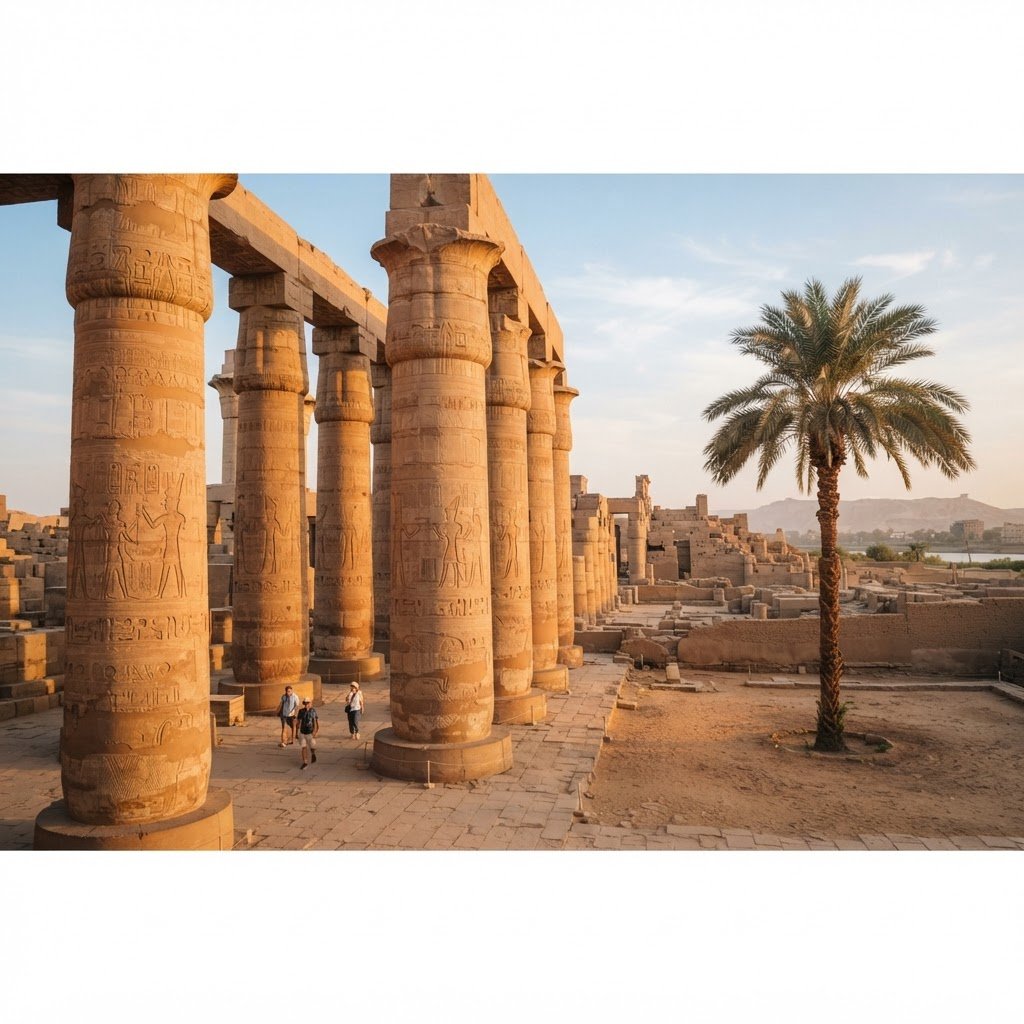
This is the time to notice the landscape—the dry wadis, the scattered mudbrick ruins, the sense of a place that has been visited for thousands of years and still feels remote.
 Valley of the Kings at dawn
When the light finds the tombs
The Valley of the Kings is built for early visits. The tomb corridors are cool and quiet before the day’s first tour groups arrive, and the painted walls hold their colour better in low, even light.
Each tomb tells a different story. Some are vast and ornate, others narrow and personal. A good guide helps you read the scenes—the journeys of the pharaohs, the symbols of protection, the carefully placed offerings.
Hatshepsut and the cliffs
The Temple of Hatshepsut rises from the desert in clean, terraced lines against the sheer cliff face. In the early light, the geometry is sharp and the shadows are long.
Stand at the base and look up. The scale of the architecture against the natural rock wall is humbling—a reminder that this was built not just to endure, but to impress across millennia.
When the valley goes quiet again
By midday the West Bank empties as quickly as it filled. The tour buses pull away, the ticket offices close their shutters, and the silence returns to the valley.
This is the time to stop at a small café on the road back to Luxor, drink a cold hibiscus juice, and let the morning settle. The best travel days leave you with something you did not expect to feel.
The West Bank does not shout. It waits. And if you arrive early enough, you have it almost to yourself.